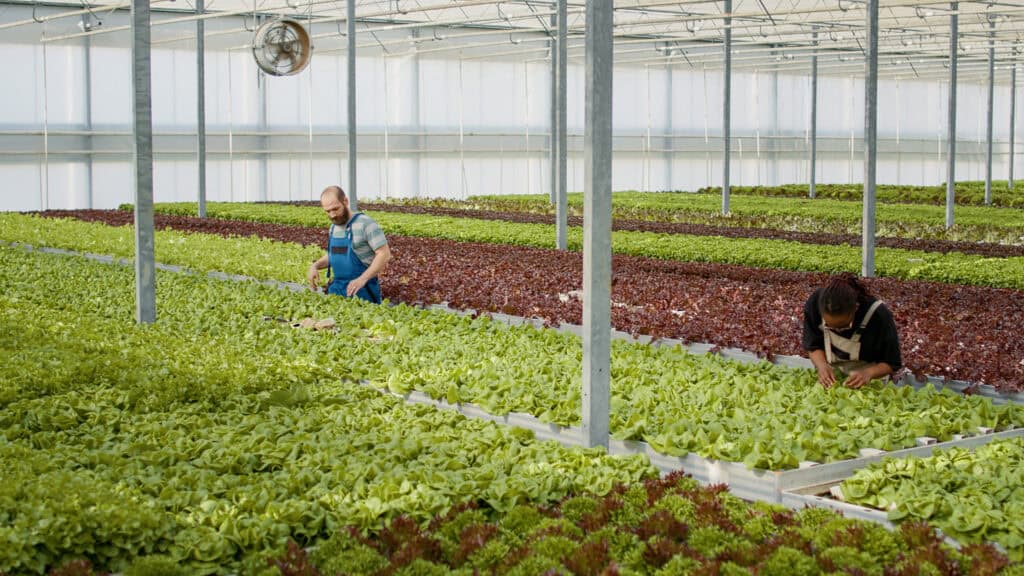
Recirculating hydroponic systems are a form of soilless cultivation where water and nutrients move through a closed-loop system rather than being discarded after a single use. In these systems, a nutrient solution is pumped from a reservoir to the plant root zone (commonly within a grow tray or flood table) and then collected and returned to the reservoir for reuse. By continuously cycling the solution, recirculating systems can reduce water waste while allowing growers to closely manage nutrient delivery.
How Recirculation Works:
A recirculating hydroponic system typically consists of a reservoir, a grow tray, plumbing (tubing/hoses/piping), and a water pump. The reservoir holds the water and nutrient solution, which can be carefully adjusted for pH and electrical conductivity (EC) to optimize plant growth. The pump recirculates the solution through the plumbing to the plant root zone, where it provides nutrients directly to the roots before draining back into the reservoir, creating a continuous closed-loop system. To maintain optimal growing conditions, dissolved oxygenation systems (air stones and air diffusers) can be used to support root respiration. Separately, filtration within the reservoir helps remove debris, sediment, and other buildup that could affect plant health.
Types of Recirculating Hydroponic Systems:
1. NFT (Nutrient Film Technique)
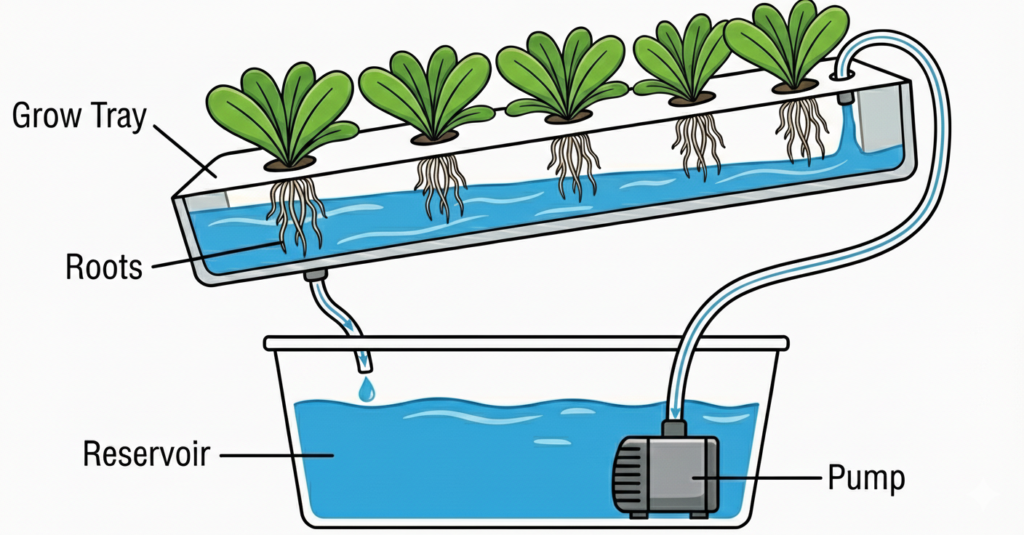
NFT uses a slightly angled growing tray, a reservoir with nutrient solution, aeration, and a water pump. The water pump moves the nutrient solution from the reservoir into the elevated end op the tray, creating a thin, continuous “film” of water over the plant roots. The solution then flows down toward the drain at the lower end of the tray, which returns it to the reservoir. The air stones keep the roots oxygenated throughout the closed loop system.
2. DWC (Deep Water Culture)
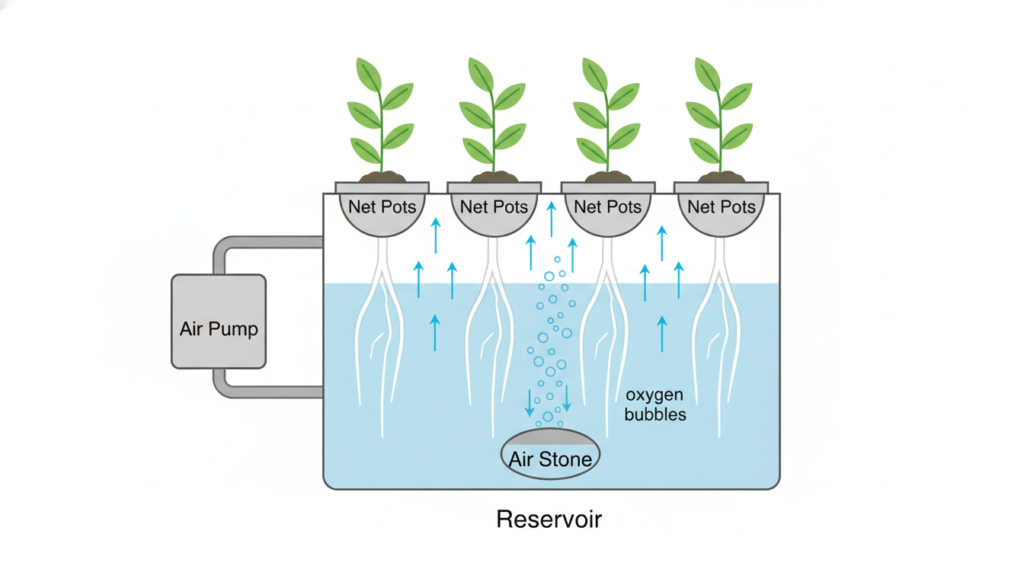
In deep water culture systems, plants sit directly in a reservoir filled with nutrient solution. The grow tray and reservoir are combined, allowing roots to always remain submerged. Continuous aeration using an air pump and air stones is essential to maintain dissolved oxygen and support root respiration, helping prevent issues like root rot. Plants are typically supported in net pots using inert growing media such as clay pebbles, rockwool, or coco coir.
3. Ebb & Flow (Flood and Drain)
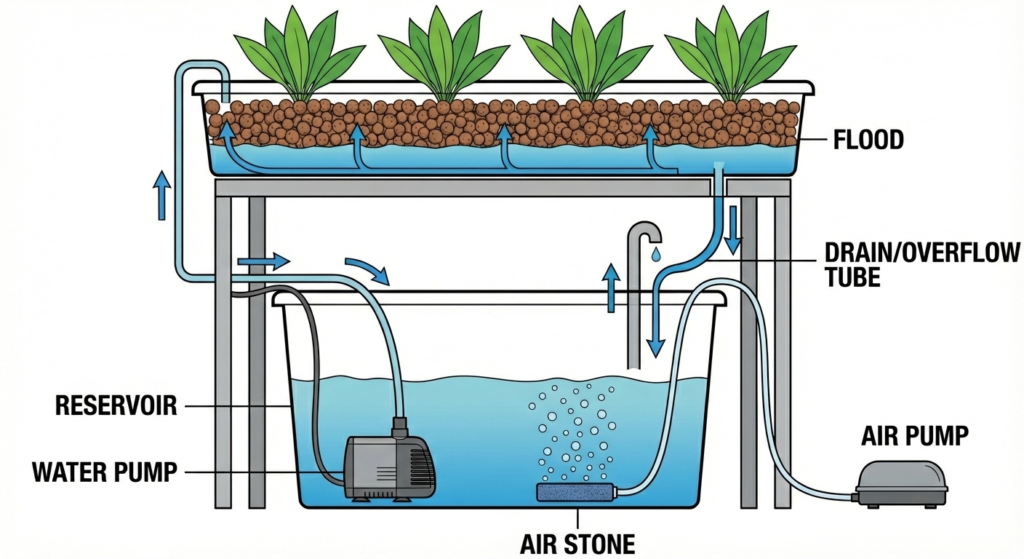
Ebb and flow systems use a separate nutrient solution reservoir and a growing tray or flood table. On a timed cycle, a pump floods the tray with nutrient solution, then drains it back into the reservoir. This periodic flooding provides roots with nutrients while allowing ample oxygen exposure between cycles. Aeration and filtration can be easily integrated into the reservoir, helping maintain dissolved oxygen (DO) levels while keeping the nutrient solution cleaner and easier to manage over time.
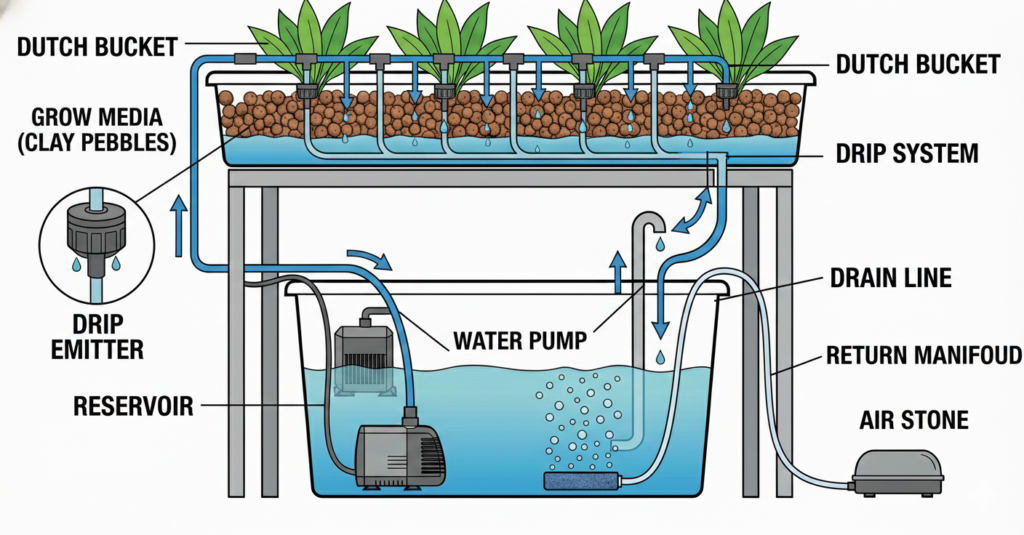
4. Recirculating Drip System
Recirculating drip systems deliver the nutrient solution directly to each plant using drip emitters. A reservoir and pump supply the solution through tubing to individual emitters, which drip the solution into net pots or containers filled with media. Excess solution drains through the bottom of the growing tray and is returned into the reservoir, creating a closed-loop system. This setup allows precise nutrient delivery while minimizing water waste.
5. Aeroponics
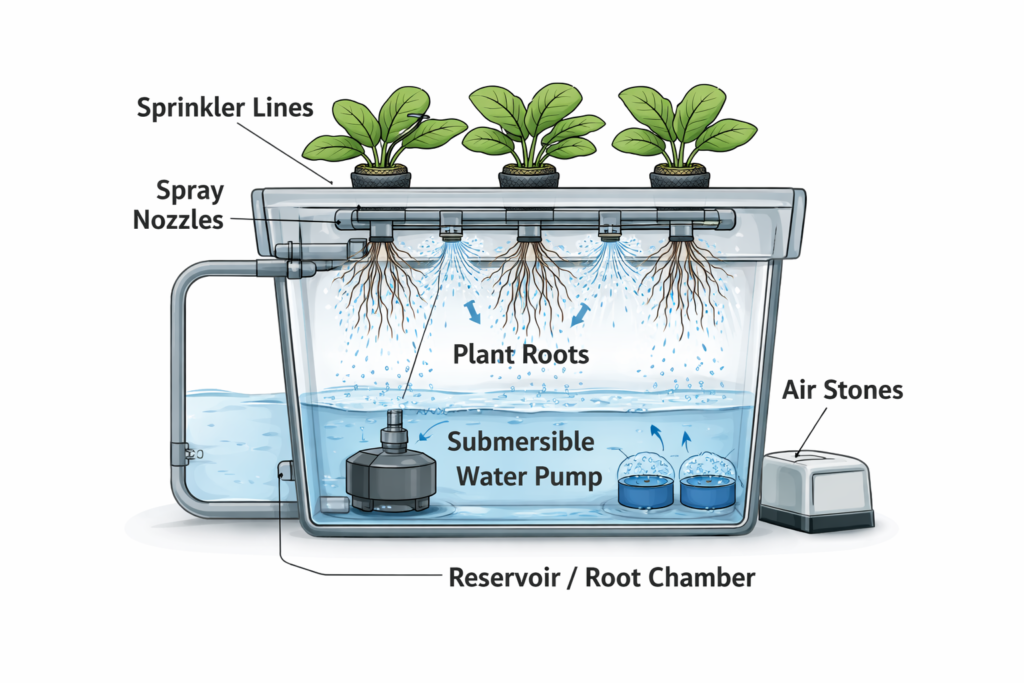
Aeroponics is a closed-loop system where plant roots are suspended in air rather than submerged in water or media. A reservoir beneath the root chamber holds a nutrient solution, which is delivered through a submersible water pump with pressurized nozzles that mist the roots at regular intervals. Excess solution collects at the bottom of the reservoir and is reused. Regular top-ups of water are necessary to maintain the correct nutrient levels, especially during longer growing cycles. This approach provides high oxygen availability at the root zone, while delivering nutrients efficiently.
Why Recirculating Hydroponic Systems Use Less Water than Soil:
Recirculating hydroponic systems minimize water use by reusing nutrient solution rather than losing it to the environment. Studies show that these systems can reduce water consumption by up to 95% compared to conventional soil-based cultivation (Pomoni,et al., 2023). In soil systems, water is lost through runoff, deep percolation, and evaporation, whereas recirculating systems maintain the solution in a closed-loop environment. This means you can use the same water in the reservoir for up to 2-3 weeks before you have to drain the reservoir for system cleaning and maintenance. Proper management, including monitoring EC and pH levels, along with topping off water as needed during the 2-3 weeks, keeps nutrients balanced and waste minimized. For insights into common hydroponic myths and their comparison with soil cultivation, check out Hydroponic Myths Debunked.
Sources:
- Pomoni, D. I., Koukou, M. K., Vrachopoulos, M. G., & Vasiliadis, L. (2023). A review of hydroponics and conventional agriculture based on energy and water consumption, environmental impact, and land use. Energies, 16(4), 1690.https://www.mdpi.com/1996-1073/16/4/1690
- Nelson II, M. N., Langellotto, G. L., & Nackley, L. N. (2025, May). Hydro hints: Ebb and flow. OSU Extension Service. https://extension.oregonstate.edu/catalog/pub/em-9458-hydro-hints-ebb-flow
- Mullins, C., Vallotton, A., Latimer, J., Sperry, T., Scoggins, H., Virginia Cooperative Extension, Virginia Tech, & Virginia State University. (2023). Hydroponic production of Edible crops: Nutrient Film Technique (NFT) systems. https://www.pubs.ext.vt.edu/content/pubs_ext_vt_edu/en/SPES/spes-463/spes-463.html
- Mullins, C. M., Vallotton, A. V., Latimer, J. L., Sperry, T. S., & Scoggins, H. S. (2023, July 19). Hydroponic production of edible crops: Deep Water Culture (DWC) systems. Virginia Cooperative Extension, Virginia Tech, and Virginia State University. https://www.pubs.ext.vt.edu/content/pubs_ext_vt_edu/en/SPES/spes-464/spes-464.html
- Garzón, J., Montes, L., Garzón, J., & Lampropoulos, G. (2023). Systematic review of technology in aeroponics: Introducing the technology adoption and integration in sustainable agriculture model. Agronomy, 13(10), 2517. https://doi.org/10.3390/agronomy13102517
- Mavrogianopoulos, G., Aglogalos, P., & Lycoskoufis, I. (2011). A continuous recirculating drip growing system. Acta Horticulturae, 952, 83–90. https://www.actahort.org/books/952/952_83.htm