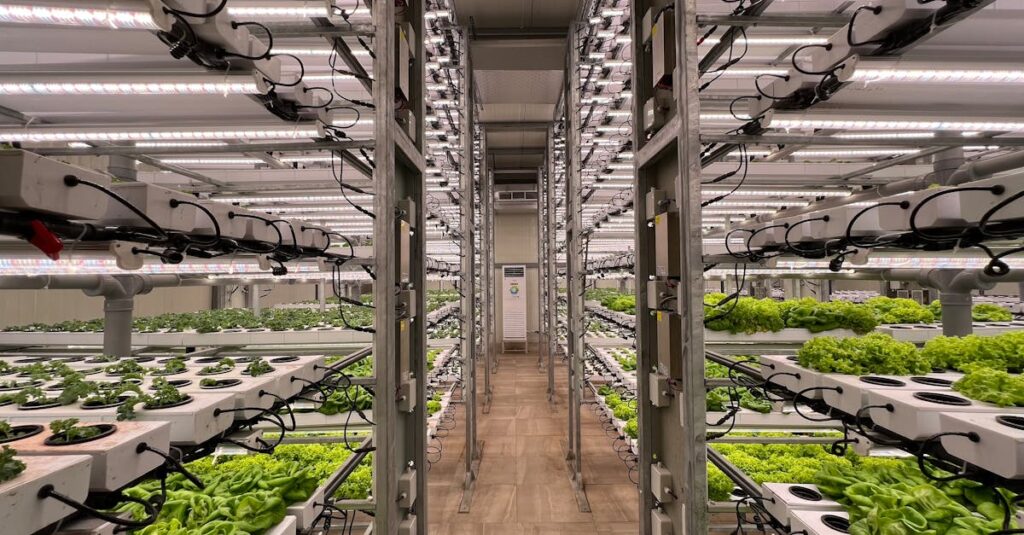
Controlled Environment Agriculture (CEA) is rapidly transforming the way crops are grown worldwide. From high-tech greenhouses to indoor vertical farms, modern cultivation practices are evolving through automation, precise nutrient delivery, and data-driven decision-making. At the center of many of these systems is hydroponics, a leading cultivation method designed to maximize efficiency, consistency, and control.
Despite its widespread use in commercial agriculture and research settings, hydroponics myths still surround our industry today. Claims that hydroponically grown crops are less nutritious, waste excessive water, or are only viable for small-scale production continue to circulate among growers, consumers, and online discussions. Many of these misunderstandings stem from outdated comparisons between (soil-grown vs. water-grown) crops.
Hydroponic systems are built on the same principles that govern all plant growth. Nutrient uptake, water use, and crop performance are all influenced by how you control the environmental conditions in your greenhouse zone. Not by whether crops are grown in soil, soilless growing media like peat and perlite, rockwool, or hydroponics.
Our insight examines some of the most common hydroponics myths through the lens of controlled environment agriculture. The goal is not to compare individual systems, but to clarify how hydroponic production functions within modern greenhouses and indoor farms, where environmental control, precision, and consistency drive success.
Myth 1: Hydroponically Grown Plants Are Less Nutritious
A common belief is that hydroponically grown plants are less nutritious than soil-grown crops. Many assume that growing in water means a lack of minerals and compounds needed for healthy growth. This misconception often comes from the idea that soil itself provides nutrition, rather than the nutrients delivered through water to the plant roots.
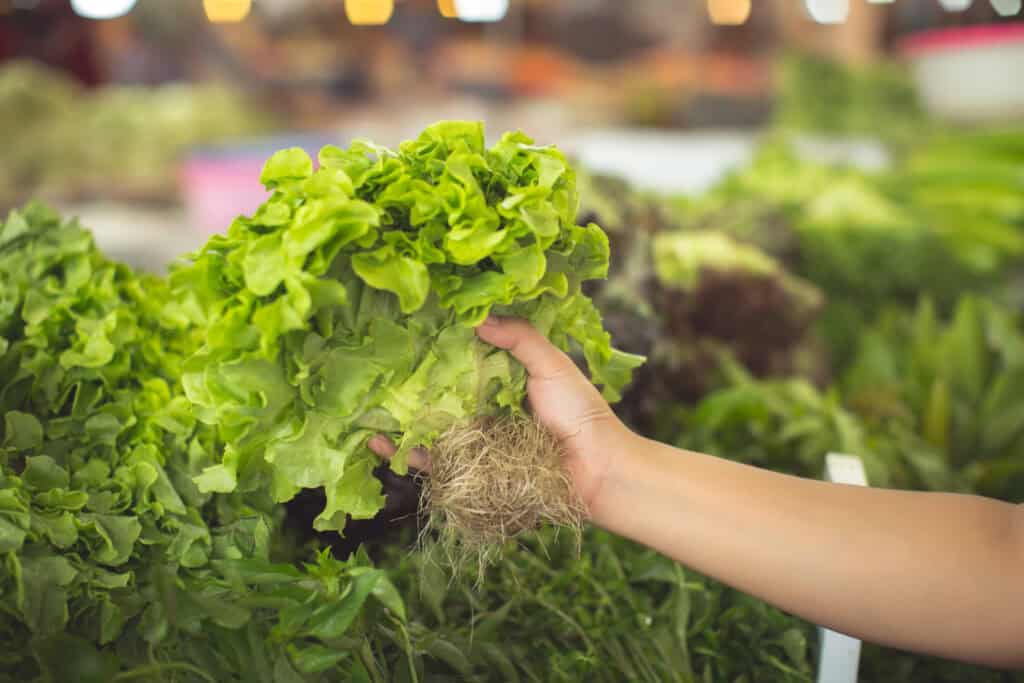
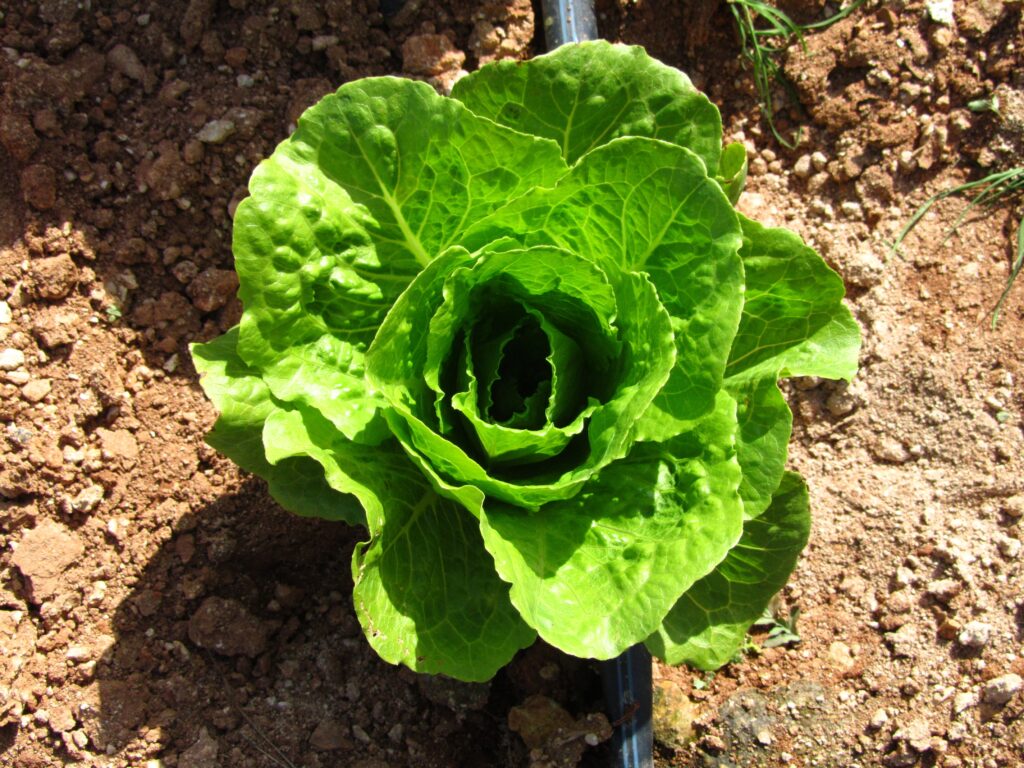
Regardless of whether crops are grown in soil, growing media, or hydroponic systems, plants absorb nutrients in the same fundamental way. Elements like nitrogen, phosphorus, potassium, calcium, and magnesium are taken up by roots in ionic form, dissolved in water. The growing medium (unless living soil) does not create nutrition; it simply serves as a delivery pathway for water and dissolved minerals. From a plant physiological perspective, hydroponic nutrient uptake follows the same biological processes as conventional cultivation methods.
In hydroponic systems, plants are not grown in plain water. They are supplied with carefully balanced nutrient solutions designed to meet crop-specific needs at each stage of growth. Growers are constantly monitoring electrical conductivity (EC), pH, and nutrient ratios to ensure optimal uptake during juvenile, transitional, and reproductive phases. This level of control allows hydroponic crops to receive precise nutrition, resulting in equal or greater nutritional quality compared to soil-grown plants when conditions are properly managed.
Controlled studies comparing soil-grown versus hydroponically grown tomatoes have shown that the nutritional outcomes of a plant depend more on environmental conditions and nutrient management rather than the type of growing medium used. In replicated experiments where humidity, temperature, light, and humidity were standardized, hydroponically grown tomatoes produced comparable yields and sugar levels to those of soil-grown. In the experiments, the deep-water culture hydroponic system produced higher concentrations of Lycopene and β-carotene (Verdoliva et al., 2021). These studies suggest that hydroponic crops can either match or exceed the nutritional quality of soil-grown produce. This does not indicate that one growing method is superior or inferior. Rather, it highlights that plant nutrition is primarily influenced by environmental control and nutrient management. When growing conditions are favorable, both hydroponic and soil-based systems are capable of producing nutritional crops.
Myth 2: Hydroponics Uses More Water Than Conventional Growing
One of the most persistent misconceptions is that hydroponics consumes more water than conventional growing methods. This assumption often comes from the visibility of water in hydroponic systems, leading many people to believe that growing without soil wastes more water than traditional field crops.
In conventional growing systems, a significant portion of irrigation water is lost through runoff, evaporation, and uneven distribution within the soil profile. Excess water often drains beyond the root zone, carrying nutrients with it and reducing overall efficiency. These losses are difficult to control, particularly in open fields and non-recirculating greenhouse systems.
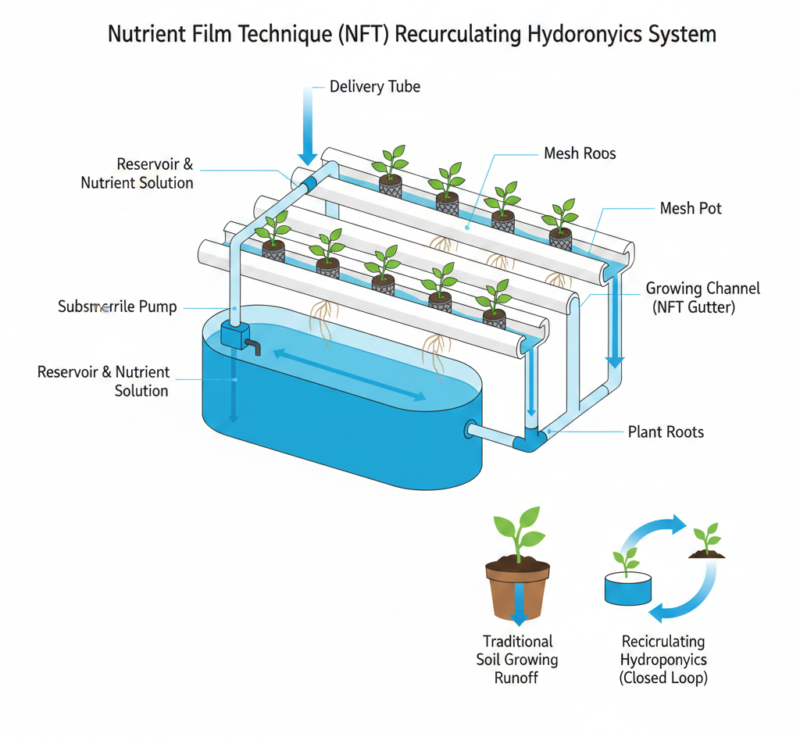
Hydroponic Systems are designed to deliver water and nutrients directly to the plant root zone with minimal loss. In many controlled environment agriculture systems, nutrient solutions are recirculated in closed-loop configurations, allowing unused water to be collected, adjusted, and reused. This approach dramatically reduces water waste while maintaining consistent nutrient availability for crops.
Numerous studies have shown that recirculating hydroponic systems can reduce water use by up to 95% compared to conventional soil-based agriculture (Pomoni,et al., 2023), depending on crop type and system design. This efficiency makes hydroponics particularly valuable in regions facing water scarcity or where sustainable resource use is a priority within modern greenhouse operations.
Myth 3: Hydroponics is Only For Hobbyists or “High-Tech Experiments”
Hydroponics is often perceived as a futuristic experiment, practiced by small-scale hobby growers and experimental research facilities. This perception is reinforced by social media content that focuses heavily on growing tents, desktop systems, or highly controlled laboratory environments. This gives the impression that hydroponics exists at extremes rather than as a practical production method.
In reality, hydroponics is widely used across the commercial greenhouse industry as a reliable and scalable production method. Many modern greenhouses and indoor farms integrate hydroponic growing not as an experiment, but as a core piece of infrastructure for consistent year-round crop production. Leafy greens, herbs, vine crops, and transplants are routinely produced at a commercial scale using hydroponic systems.
Hydroponic systems blend well with commercial production because they allow growers to control key variables that directly influence crop performance. Water delivery, nutrient availability, root-zone oxygenation, and environmental conditions can all be managed with precision. This level of control enables consistent crop quality, predictable growth cycles, and efficient use of inputs across large production areas.
Understanding The Role of Control in CEA
Many misconceptions surrounding hydroponics stem from a misunderstanding of how controlled environment agriculture operates. In CEA systems, crop performance is shaped by the interaction of climate control, IPM, irrigation strategy, nutrient management, lighting, and automation. Hydroponics is not a standalone solution, but rather a component within a tightly managed environment.
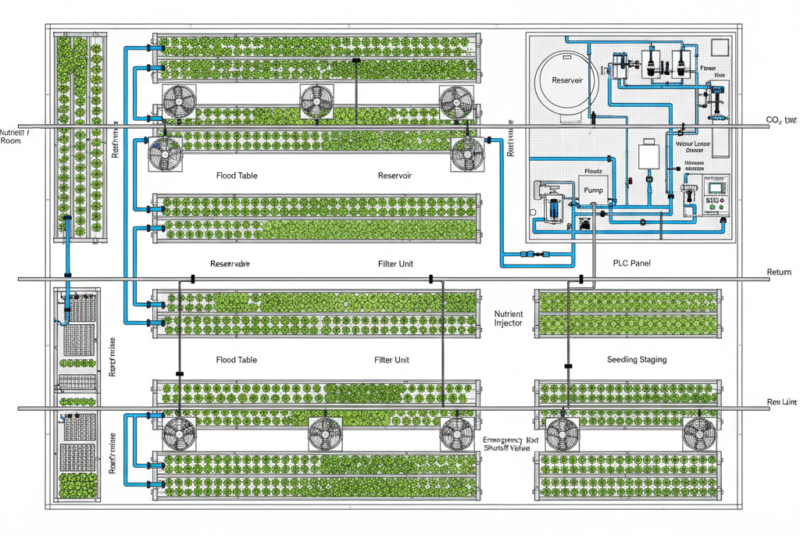
When these systems are designed and operated correctly, growers can fine-tune conditions to match crop-specific needs at every stage of development. This level of control allows for consistency, resource efficiency, and predictable outcomes that are difficult to achieve in open field systems. Understanding hydroponics within a broader context helps explain why it is widely adopted across commercial greenhouses.
Sources:
- Pomoni, D. I., Koukou, M. K., Vrachopoulos, M. G., & Vasiliadis, L. (2023). A review of hydroponics and conventional agriculture based on energy and water consumption, environmental impact, and land use. Energies, 16(4), 1690.https://www.mdpi.com/1996-1073/16/4/1690
- Syed, A.-u.-A., Khan, Z. A., Chattha, S. H., Shaikh, I. A., Ali, M. N. H. A., Bughio, Z. u. R., Dahri, S. H., & Buriro, G. B. (2021). Comparative assessment of hydroponic and geoponic cultivation systems for sustainable spinach cultivation. Pakistan Journal of Agricultural Research, 34(4), 678–688. https://doi.org/10.17582/journal.pjar/2021/34.4.678.688
- Griffiths, M., & York, L. M. (2020). Targeting root ion uptake kinetics to increase plant productivity and nutrient use efficiency. Plant Physiology, 182(4), 1854–1868. https://doi.org/10.1104/pp.19.01496
- Dunn, B., & Singh, H. (2017, April). Electrical Conductivity and pH Guide for Hydroponics – Oklahoma State University. OSU Extension. https://extension.okstate.edu/fact-sheets/electrical-conductivity-and-ph-guide-for-hydroponics.html
- Rajaseger, G. (2023). Hydroponics: Current trends in sustainable crop production. Bioinformation, 19(9), 925–938. https://doi.org/10.6026/97320630019925
- Verdoliva, S. G., Gwyn-Jones, D., Detheridge, A., & Robson, P. (2021). Controlled comparisons between soil and hydroponic systems reveal increased water use efficiency and higher lycopene and β-carotene contents in hydroponically grown tomatoes. Scientia Horticulturae, 276, 109795.https://www.sciencedirect.com/science/article/pii/S0304423821000030?via%3Dihub